Up next in 10


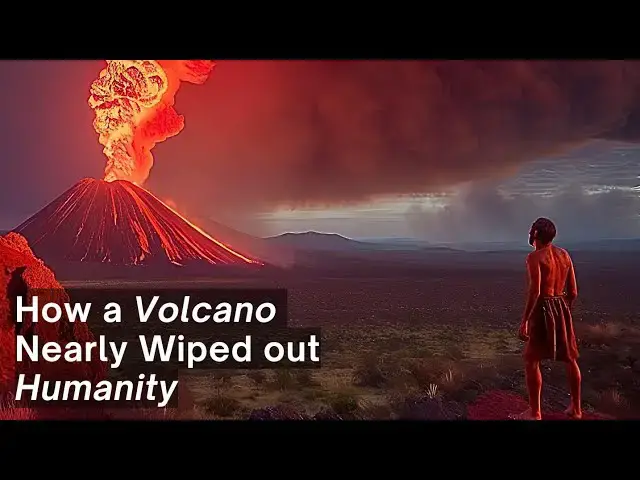
Did you know a single volcanic eruption nearly brought humanity to the brink of extinction? In this video, we explore recent research on the catastrophic effects of supervolcanic eruptions and their role in shaping human history. Scientists have uncovered evidence suggesting that events like the Toba eruption, 74,000 years ago, drastically reduced global temperatures, triggering a volcanic winter and a severe bottleneck in human population.
Using advanced techniques like ice core analysis, sediment studies, and climate modeling, researchers are unraveling the long-lasting environmental impacts of such eruptions. Discover how these findings help us understand ancient survival strategies and prepare for potential future volcanic threats.
This video explores how Toba Eruption influenced human migration out of Africa after 90000 years ago.
Join us as we delve into the fascinating intersection of geology, anthropology, and climate science to uncover how humanity managed to survive nature's most powerful forces.
Show More Show Less View Video Transcript
0:09
around 74,000 years ago the earth was beginning to emerge from one of its recent ice ages while the ice reshaped
0:16
much of the planet the climates remain mostly steady in the tropical regions a
0:22
wide range of late Ice Age mammals inhabited the world including the meapa
0:28
and some apex predators up in the cold regions of
0:33
Eurasia at this point humans had spread across many parts of the old world
0:39
although they had not yet reached Australia or the Americas Most of the human population
0:45
consisted of archaic Homo sapiens who had first appeared in southern Africa
0:51
about 300,000 Years Ago by 74,000 years ago these early
0:58
humans had moved out of Africa and settled in much of Asia as well as parts of Southeastern
1:04
Europe however Europe was still dominated by another human species the
1:09
neander tals who had adapted to life on the fringes of the northern ice sheets
1:15
unlike homos sapiens neander tals were specifically adapted to conserve heat in
1:20
cold climates Denise ofans another early human species was leaving its mark on the higher altitudes in
1:28
Asia far to the east early humans had spread throughout South and Southeast
1:34
Asia on the islands of Southeast Asia including what is now Indonesia and the
1:40
Philippines Homo erectus had likely evolved into smaller species such as
1:45
homo florensis and Homo lenensis these Hobbits stood at just over 3 ft
1:54
tall shorter than any modern adult pygmies as humans journeyed from Africa
2:00
to settle in distant corners of the earth they encountered a massive catastrophe the eruption of Mount Toba
2:07
which drastically altered the ecological landscape of the time many scientists believe that this
2:15
massive volcanic eruption caused a crash in the human population referred to as
2:20
the genetic bottleneck in the human population a genetic bottleneck occurs
2:26
when a population's size is dramatically reduced typically due to a catastrophic
2:31
event this sharp decrease in population leads to a loss of genetic
2:37
diversity when the species recover from such an event it does so from a small
2:43
number of survivors resulting in future populations having reduced genetic
2:50
variability um additionally genes that were once rare in the species may become
2:56
more common due to the limited genetic pool of the the
3:01
survivors over millions of years of Earth's history volcanic activity has shaped its climate and evolution major
3:08
volcanic eruptions during the last 3 million years have caused sharp drops in temperatures these conclusions came from
3:15
analizing fossils found in deep sea cores during these cooler periods
3:20
drought resistant plants expanded showing significant changes in rainfall
3:27
patterns in the 1980s Fe years of nuclear war between the USA and USSR LED
3:33
scientists to study nuclear winter the potential global cooling effect of nuclear explosions these studies
3:41
revealed that a nuclear war could cause widespread famine due to massive crop
3:48
failures the climate models developed for nuclear winter studies were later applied to understanding large volcanic
3:55
eruptions like the massive Toba eruption 74,000 years ago researchers also
4:00
examined historic eruptions like katow Tambora and Pinatubo which caused brief
4:06
cooling effects lasting about a year or two the southeast Asia constitutes a
4:12
volcanic island chain which includes somatra Java and many smaller islands in
4:18
the Malay archipelago the islands are all formed from volcanoes both active and ancient
4:25
and their dense tropical jungles are nourished by the rich volcanic soil often making it difficult to recognize
4:32
the presence of volcanoes beneath the Lush
4:38
vegetation the tobba volcano located in Northern Sumatra sits in an area with
4:43
frequent earthquakes and volcanic activity this is because it is near the Java subduction trench where the Indo
4:51
Australian plate and the Sund plate meet and push against each
4:57
other Toba is the largest volcanic crater or Caldera from the last 2.6
5:02
million years measuring about 100 km long and 30 kmet wide Toba lies where
5:10
two major geological fault lines the catron fault and the investigator fracture Zone meet making the area
5:17
highly unstable Toba has erupted four times in
5:23
the last million years its most powerful eruption about 74,000 years ago created
5:29
ated the current Caldera and deposited a thick volcanic layer called youngest
5:34
tobat over 20,000 square kilom with Ash spreading globally the Caldera is still
5:42
uplifting a process that may continue for hundreds of thousands of years before the next major
5:49
eruption scientists have studied the ash from the massive Toba eruption known as
5:55
the youngest tobat using Marine sediment cores which are layers of mud and sand
6:00
collected from the ocean floor that preserve Earth's history over 30 years ago researchers
6:08
found a widespread Ash layer in cores from the Northeast Indian Ocean and Bay
6:13
of Bengal research confirmed it came from Toba volcano around 75,000 years
6:20
old this eruption coincided with a global climate shift from a warm
6:26
interglacial to a colder glacial period later studies expanded the known range
6:33
of youngest Toba Tu the ash from Toba covered an area exceeding 10 million
6:39
square kilm reaching as far as the Indian Ocean and South China
6:44
Sea the eruption was massive with an ash volume of 20,000 Square km the Ash's
6:51
spread indicates winds carried it both Westward and Eastward during the eruption which lasted about 9 to 14 days
6:58
and reached Heights of at least 45 km in some ocean sediment cores the ash
7:06
layer is associated with a sharp cooling event confirmed by comparisons with
7:11
Greenland ice core data however not all records show a
7:17
clear temperature drop possibly because the cooling was brief and difficult to detect in sediment layers that
7:23
accumulate slowly this underscores the complexity of reconstructing ancient
7:28
climate impact impacts the Toba eruption left volcanic
7:34
ash the youngest tobba across large parts of Asia this ash was first noted
7:40
on land in 1930 in Malaysia where a thick layer covered older sand and
7:45
gravel containing ancient stone tools chemical tests confirmed this ash
7:52
came from Toba similar thick Ash deposits were also found in Borneo
7:58
though their chemistry hasn't been analyzed yet in India volcanic ash linked to Toba
8:07
was first found in the Sun Valley over time researchers identified youngest
8:14
tobat in many parts of the Indian subcontinent using Advanced chemical analysis to confirm its
8:22
origin these studies also examined older Toba eruptions like the middle tobat and
8:27
oldest tobat to distinguish them from the youngest tobat the youngest toat Ash likely
8:35
covered much of India soon after the eruption forming a layer about 10 to 15
8:41
cm thick however natural erosion from rain and flowing water quickly removed
8:47
much of this ash from hills and concentrated it in valleys lakes and
8:54
rivers this process is similar to what happened after the 1980 Mount St Helen's
8:59
eruption in the US where most Ash was washed away within a few
9:04
years scientists also debated the presence of older Toba Ash in India some
9:10
studies suggested it might exist in ancient deposits with early human tools
9:16
but this remains uncertain due to the reworking of the Ash and tools over time
9:21
to confirm the origins of any Toba Ash researchers need precise chemical and
9:26
dating methods the the youngest Toba tough eruption occurred approximately
9:33
74,000 years ago as confirmed by Advanced dating techniques this eruption ranks as one of
9:41
Earth's largest known volcanic events with a volcanic explosivity index of 8
9:47
categorizing it as a super eruption the eruption expelled approximately 2800
9:53
cubic kilom of volcanic material far exceeding the output of historical eruptions like Tambora of
10:01
1815 and katow of 1883 the environmental impact of the
10:09
youngest toat eruption was profound it released massive amounts of sulfur
10:16
forming sulfuric acid aerosols that temporarily blocked sunlight estimates
10:22
of sulfur released very significantly from 3.5 trillion to 33 30 trillion G
10:31
but even the lower estimates imply considerable atmospheric
10:37
disturbance this reduction in sunlight could have ranged from conditions resembling an overcast day to levels
10:44
barely sufficient for photosynthesis these effects may have caused short-term global cooling though
10:51
the precise extent remains uncertain due to conflicting data volcanic eruptions like the massive
10:58
to super eruption can have dramatic effects on the climate both globally and
11:04
locally after an eruption the release of sulfur into the atmosphere forms tiny droplets of sulfuric
11:11
acid these droplets act like mirrors reflecting sunlight away from the earth
11:16
and causing a rapid cooling effect within a few months even smaller eruptions with high sulfur levels can
11:23
cool the planet more than bigger eruptions with less sulfur scientists measure the impact of of eruptions was
11:30
something called the dust Veil index or DVI which shows how much volcanic dust
11:35
is in the air and how long it stays the Toba eruption had a DVI of about three
11:42
lakh which is thousands of times greater than the Catal eruption of 1883 this
11:48
means toba's effects on temperatures and weather patterns were far more intense
11:53
and lasted longer while fine Ash particles from Toba could have stayed in the air for years larger Ash particles
12:00
fell back to the ground quickly reducing some of the long-term impacts one of the major ways volcanic
12:08
eruptions affect the planet is by changing rainfall patterns volcanic dust
12:13
has been linked to severe droughts like those in Asia during the 17th and 18th centuries cooling caused by eruptions
12:21
can weaken Key weather systems such as the Asian Monsoon leading to less rain
12:26
and longer droughts cooler ocean surfaces after such eruptions can also cause less rainfall and these effects
12:34
can last for decades locally volcanic ash can cause many problems it can
12:40
create a temporary condition called mock aridity where plants struggle to grow because the ash blocks water from
12:47
soaking into the soil even in humid climates the ash can also make soil and
12:53
water more acidic harming plants and animals for thousands of years by
12:58
reflecting sunlight light Ash deposits temporarily cool the land and reduce rainfall although this usually lasts
13:04
only a few years the Toba eruption is often compared to the idea of a nuclear winter
13:11
where Ash and debris block sunlight causing extreme global cooling it likely
13:17
played a role in ongoing climate shifts at the time including colder temperatures growing ice sheets and
13:25
falling sea levels uh some scientists believe Toba may have sped up the start of the last
13:31
ice age though others argue the cooling had already begun before the eruption toba's eruption may have cooled the
13:38
Northern Hemisphere by about 3° for several years with some areas experiencing even more extreme drops for
13:45
example summer temperatures in parts of Canada could have been 10 to 15° lower for 2 or 3 years ice cores from places
13:53
like Greenland show evidence of volcanic Fallout including a spike in Sulfur that lasted 6 to 7 .5 years as well as colder
14:01
conditions and increased dust levels however it's now believed the glaciation
14:07
that followed was already underway before Toba
14:14
erupted the eruption also had far-reaching effects on ecosystems and early human populations the extreme
14:21
Cooling and changes in weather would have devastated plants and crops likely leading to widespread famine
14:29
some researchers think this may have caused a sharp decline in early human numbers contributing to a genetic
14:38
bottleneck Recent research confirms that Toba eruption had varying impacts on
14:44
climate across different regions in Africa and India the cooling effect was less severe with temperatures dropping
14:50
by No More Than 4° This milder cooling allowed human populations to continue
14:56
their activities challenging the idea of of a catastrophic bottleneck rainfall decreased but conditions remained mild
15:03
in southern Africa with no extreme freezing temperatures Southern India saw
15:09
forests persist longer than Northern India where cooler temperatures led to a shift from forests to
15:21
Grasslands in Europe and Asia the cooling was much more pronounced with temperature drops reaching up to 10°
15:28
centigrade these severe conditions likely contributed to the decline of neandertals in Europe and other early
15:35
human species in Asia as ecosystems became harsher and food sources more
15:40
scarce the cooling in these regions was significantly more disruptive than in
15:45
Africa and India the southern hemisphere experienced weaker cooling due to
15:52
volcanic particles being concentrated in the northern hemisphere oceans also helped moderate the climate preventing
15:59
drastic temperature drops this led to more stable conditions compared to the northern
16:11
hemisphere the Toba catastrophe model demonstrates a remarkable convergence of evidence from various scientific Fields
16:19
uniting findings about volcanic events and human population history independent
16:24
Research into mitochondrial DNA from diverse human populations revealed signs of a significant
16:31
population bottleneck around 70,000 years ago followed by a rapid population
16:37
expansion approximately 50,000 years
16:45
ago subsequent reviews connected this genetic bottleneck to the Toba eruption
16:51
suggesting that the massive volcanic event may have played a key role in shaping the early history and Recovery
16:59
of modern human populations in the context of human
17:06
fossils the bottleneck aligns with a weak Garden of Eden model of human
17:11
evolution this model suggests that modern humans originated in Africa with
17:17
groups migrating out at various times the earliest migrant Homo rectus
17:25
left Africa about 1.8 million years ago reaching China and Java by 7 lak 80,000
17:32
years ago before disappearing around 70,000 years ago another archaic human
17:38
relative homo H highle bensis emerged in Europe around 6 lakh years ago and
17:44
disappeared approximately 3 lakh years ago the fossil data indicates that the
17:52
modern human lineage emerged in Africa around 3 lakh years ago the African
17:59
origin of modern humans during the middle Pline is supported by
18:05
archaeological fossil and genetic evidences sites like Jebel ear hood omo
18:12
and herto provide insights into early modern Homo sapiens in Africa around
18:18
three lakh years ago displaying a mix of archaic and modern traits these fossils
18:25
represent transitional stages from our aric to Modern Homo
18:33
sapiens during the middle place to scene early modern humans had a wide
18:39
distribution across Africa supporting the concept of African multi- regionalism fossils from different
18:46
regions and within the same area showed diverse combinations of archaic and modern traits indicating separate
18:53
evolutionary paths fluctuating gene flow among small nomadic foraging groups
19:00
contributed to this diversity while the prevailing model suggests a rapid single
19:05
wave dispersal Out of Africa Recent research proposes a more complex
19:13
scenario after their origin around three lakh years ago several bands of humans
19:18
made attempts to move out of Africa but got fully successful only after 50 to
19:24
45,000 years ago before that they were primarily restricted to Africa and
19:30
neighboring parts of Southwest Asia like Levant outside of Africa modern Homo
19:38
Sapien burials have been uncovered at the sites of Skool and C in Israel dated
19:44
to between 90 to 130,000 years old respectively similarly the site of
19:50
jebala in the United Arab Emirates contain tools that indicate Homo sapiens
19:56
may have migrated here as early as one black 30 years ago
20:03
too about 600 km away from Mount Caramel a fossil from alusta in Saudi Arabia
20:10
represented by a single finger bone overlaps with the time range of the school and KS fossils additionally stone
20:19
tools found throughout the Arabian Peninsula indicate human presence although skeletal remains are scarce
20:29
after expanding Out of Africa modern Homo sapiens likely used two connections to the West Asia one through the Sinai
20:36
Peninsula to the Levant Eastern Mediterranean and another through the southern Arabian Peninsula via the
20:42
Straits of Babel mandb modern humans could have thrived along the southern coast of the Arabian
20:48
Peninsula utilizing resources and establishing routs towards South
20:55
Asia the fate of modern humans in the the Levant after 990,000 years ago
21:01
remains uncertain modern humans did not appear in the region until 45,000 years
21:06
ago and it is speculated that competition with neander tals may have played a role in The Disappearance of
21:13
modern human occupation the Toba volcanic eruption is
21:18
believed to have caused temporary Cooling and potentially disrupted
21:23
ecosystems which could have indirectly influenced human populations
21:30
the main debate about the origins and migrations of modern humans centers on whether they migrated Out of Africa into
21:37
Asia before or after the Toba eruption if humans reached Asia before the
21:43
eruption they likely were not the ancestors of modern humans as they predate the bottleneck and disappeared
21:50
with post Toba populations repopulating the world many researchers argue that humans
21:57
spread to Eurasia only after the eruption aligning with both archaeological evidence and genetic data
22:03
however some archaeological sites in Asia claim to be over 75,000 years old though their dating and
22:11
connection to modern humans remain
22:17
uncertain genetic studies including those of mitochondrial and nuclear DNA
22:22
support the replacement hypothesis these studies suggest that humans did indeed originate in Africa
22:29
and then spread to other parts of the world around one lak years ago the bottleneck during the time made it
22:36
unlikely for humans to have evolved gradually in different regions as suggested the multi-regional
22:44
theory Additionally the African human population is the genetically most diverse human
22:50
population almost all present-day human genomic diversity can be traced to
22:56
African populations if humans had evolved separately in different regions we would expect some
23:03
unique genetic traits in these populations but no such traits have been
23:11
found between 6 lakh to 3 laak years ago the human population grew rapidly
23:18
especially in Africa likely due to advancements in technology that allowed for better survival and resource use
23:25
leading to higher population densities this growth and spread of humans from
23:31
Africa supports the idea that modern humans replaced earlier populations the timeline for the shift
23:38
to Modern human behavior is becoming clearer early signs of the later Stone
23:44
Age are found in Kenya and Tanzania dating back over 50,000 years in places
23:50
like Israel the Sinai Peninsula and Europe the transition from the middle Paleolithic to the upper Paleolithic
23:58
occurred occurred around 46 to 42,000 years ago this pattern supports the idea
24:03
that modern humans and their technology originated in East
24:08
Africa however it's unclear whether this cultural leap was directly linked to a
24:14
population recovery after a genetic bottleneck the timing of this bottleneck event in Africa is still
24:21
debated typically populations that survive bottlenecks have less genetic
24:26
diversity but Africa being a large land mass should have had
24:31
the most diversity after the bottleneck studies show that Africa has about three
24:37
times more genetic diversity than other regions this raises the question of what
24:43
caused these bottlenecks and why modern humans expanded afterwards tobo super eruption
24:49
is considered one possibility which occurred around the same time as the bottleneck the Toba super eruption was
24:57
initially believed to have caused the extinction of hominins outside Africa leaving only equatorial African
25:04
populations to recolonize the rest of the world this idea aligned with the
25:09
outof Africa model suggesting a replacement of global populations with
25:14
modern humans originating from Africa after the eruption archaeological
25:19
findings contradict the hypothesis of widespread Extinction in somatra and
25:24
Malaysia stone tools dated to the time of the eruption suggest local human
25:29
survival similarly in India's juru and Son river valleys middle Paleolithic
25:36
tools before and after the eruption show continuity in human activity China also
25:42
exhibits uninterrupted cultural and technological Traditions with no evidence of a population Hiatus due to
25:50
Toba discoveries like modern human teeth in fuen cave China dating 120 to 80,000
25:57
years ago demonstrate that modern humans were already present in Asia before the
26:03
eruption this undermines claims that Posta migrants from Africa replaced existing populations archaic hominin
26:11
such as neandertals denisovans homo floresiensis and homol lenensis survived
26:17
across Eurasia during the same period even in Regions near the tobac crater
26:22
their continued existence further refutes the notion of complete Extinction caused by the
26:29
eruption as geologists refined the Toba eruption model and geneticists examined
26:34
the timing of genetic changes in humans additional evidence of population bottlenecks emerged from diverse sources
26:41
strengthening the case for a global impact research on various species
26:46
revealed similar patterns of population reduction and Recovery around the time
26:51
of the Toba eruption in 2004 DNA analysis of tiger subspecies showed a severe bottleneck
26:58
about 72,000 years ago aligning with human timelines further studies in
27:05
2014 revealed widespread bottlenecks in Southeast Asian cat populations including
27:12
cheetahs around the same period similarly DNA sequencing of giant pandas
27:18
in 2012 found evidence of significant population fluctuations with a major
27:23
bottleneck occurring before 50,000 years ago primat stud echoed these findings
27:30
orangutans experienced a bottleneck and subsequent expansion around 64,000 years
27:36
ago while macx in South Asia faced a bottleneck coinciding with or shortly
27:43
after the Toba event even in Africa gorillas and chimpanzees showed signs of population
27:50
crashes around 70,000 years ago with Guerilla populations estimated to have
27:56
dropped to about 29 ,000 mated pairs surprisingly even bacteria reveal
28:04
Clues to this ancient event helicobactor pylori a gut bacterium found in over
28:10
half of humans traces its spread from African ancestors two Eurasian populations to before
28:17
58,000 years ago just after the Toba eruption and human population expansion
28:24
these patterns are consistent across many sequenc genomes of organisms with the Eurasian ancestors from 70,000 years
28:31
ago showing bottlenecks followed by population recoveries about 50,000 years
28:36
ago While most research focuses on prominent species untapped genomes May
28:41
hold further surprises offering even more insights into the far-reaching impacts of the TOA eruption analysis of
28:50
Eastern chimpanzees mitochondrial DNA shows a population decline around the
28:56
same time as humans suggesting a Global Environmental catastrophe likely triggered by toba's eruption some
29:04
chimpanzee populations in particular areas of Uganda and zir went through a bottleneck around 67,000 years ago other
29:12
populations in more exposed areas may have been affected by climate changes during the last glacial maximum about
29:19
20,000 years ago volcanic eruptions rich in Sulfur can cause global cooling but
29:26
toba's eruption was different while eruptions like tobas are explosive
29:32
they emit fewer sulfur aerosols making their cooling effects less immediate but
29:38
potentially longer lasting climate models and Ice core data suggest that
29:44
toba's eruption caused rapid cooling over the first few years followed by a
29:49
cooling period lasting decades and even centuries this cooling could have led to
29:55
reduced precipitation and affected ecos systems globally in southern Africa
30:01
there is no evidence of disruption in human activity during or after the eruption similarly terrestrial mammals
30:08
in Southeast Asia including humans appear to have endured the environmental effects with limited impact showing
30:15
resilience against the tobo event the tobba super eruptions climatic impact
30:20
was significantly influenced by the type and quantity of sulfur aerosols released
30:26
Research indicates that the eruption might produced smaller aerosol particles or released a lower amount of sulfuric
30:32
acid aerosols which could have limited the magnitude of cooling this would result in a milder volcanic winter
30:39
comparable to Modern eruptions such as Mount Pinatubo where cooling effects were temporary and not as
30:45
extreme water vapor emissions during the eruption were crucial in mitigating its
30:51
impact water vapor is far more abundant in volcanic gases than sulfur dioxide
30:58
and has a warming effect on the Atmosphere by increasing global warming water vapor could have counterbalanced
31:04
the cooling effects of volcanic aerosols leading to a less severe climatic disruption simulations that incorporate
31:12
water vapor emissions show limited environmental impacts further supporting this view solar insulation Earth's
31:20
principal energy source was higher around 74,000 years ago than today due
31:25
to orbital configurations these conditions allowed for faster recovery from the cooling period additionally
31:32
orbital factors created seasonal patterns that could have facilitated human survival such as colder Springs
31:39
warmer Autumns and less extreme temperature differences between summer and winter the volcanic eruption likely
31:46
caused immediate northern hemisphere summer cooling but simultaneous winter
31:52
warming this would have minimized Global temperature drops in the initial years after the eruption such seasonal
32:00
adjustments could have enabled ancient humans to adapt to the changing climate
32:05
or migrate to less affected regions enhancing their chances of survival the
32:10
tobas super eruption caused significant destruction to local environments and influenced global weather
32:17
patterns however high-resolution geological records suggest that the climate and ecosystems recovered within
32:24
a few years avoiding long-term global Devastation archaeological evidence
32:31
shows continuous human activity before and after the eruption even in heavily
32:37
Ash affected regions like India and Sumatra highlighting ancient humans adaptability to environmental
32:44
changes genetic analyses of archaic humans such as neander tals denin and
32:51
species like homo floresiensis and homol lenensis further confirm their survival
32:56
during and after the tooba event this evidence challenges the hypothesis that
33:01
the eruption caused widespread human extinction and a Severe population
33:06
bottleneck while the idea of toba's catastrophic Global impact offers a
33:12
simplistic explanation for complex phenomena it ignores critical factors in
33:17
Earth's systems and human adaptability current data demonstrate
33:23
that the influence of the Toba eruption on global climate ecosystems and ancient
33:29
human populations was significantly overestimated it is now necessary to
33:35
adopt a more nuanced and evidence-based perspective on paleoclimatic changes and
33:41
human evolution moving beyond outdated catastrophic interpretations
33:50
[Music]
#Earth Sciences
#Geology
#Climate Change & Global Warming